
“I was struck by the ability of the business world to bring together people with such different backgrounds.”
Anna Gamburd, 2026 Summer Internship Participant
November 2, 2026
This summer I had the honor of spending two months interning at the Shanghai branch of an investment advisory boutique specializing in China-Europe cross-border markets. This experience was made possible by generous funding from the Harvard China Fund and by the support of my mentors at Harvard and in Shanghai. This was my first time working in finance and living in China for an extended period of time, and it was a formative experience that came at a key turning point in my academic, professional, and personal trajectory.
The internship was key to the development of my professional interest in international private law, introducing me to the legal framework regulating international business. I understood that as the public sector becomes increasingly deglobalized on both the national and international levels, the private sector serves as a safeguard of continued globalization and international cooperation. This insight came both from engaging with the practical impact of national and international regulation on the conduct of business, and from observing the interpersonal dynamics at play in the professional environment in which I worked. My office was located in Jinmao Tower, in the heart of Shanghai’s financial district. The coworking space on our floor would regularly be the site of business meetings between Chinese professionals and visitors from various European countries. I would also often hear Russian spoken, both among employees on our floor and during my strolls through the financial district more generally. Accustomed to learning about China, Russia, Europe, and the US through the prism of legal history, which emphasizes the differences between these countries’ cultures, I was struck by the ability of the business world to bring together people with such different backgrounds.
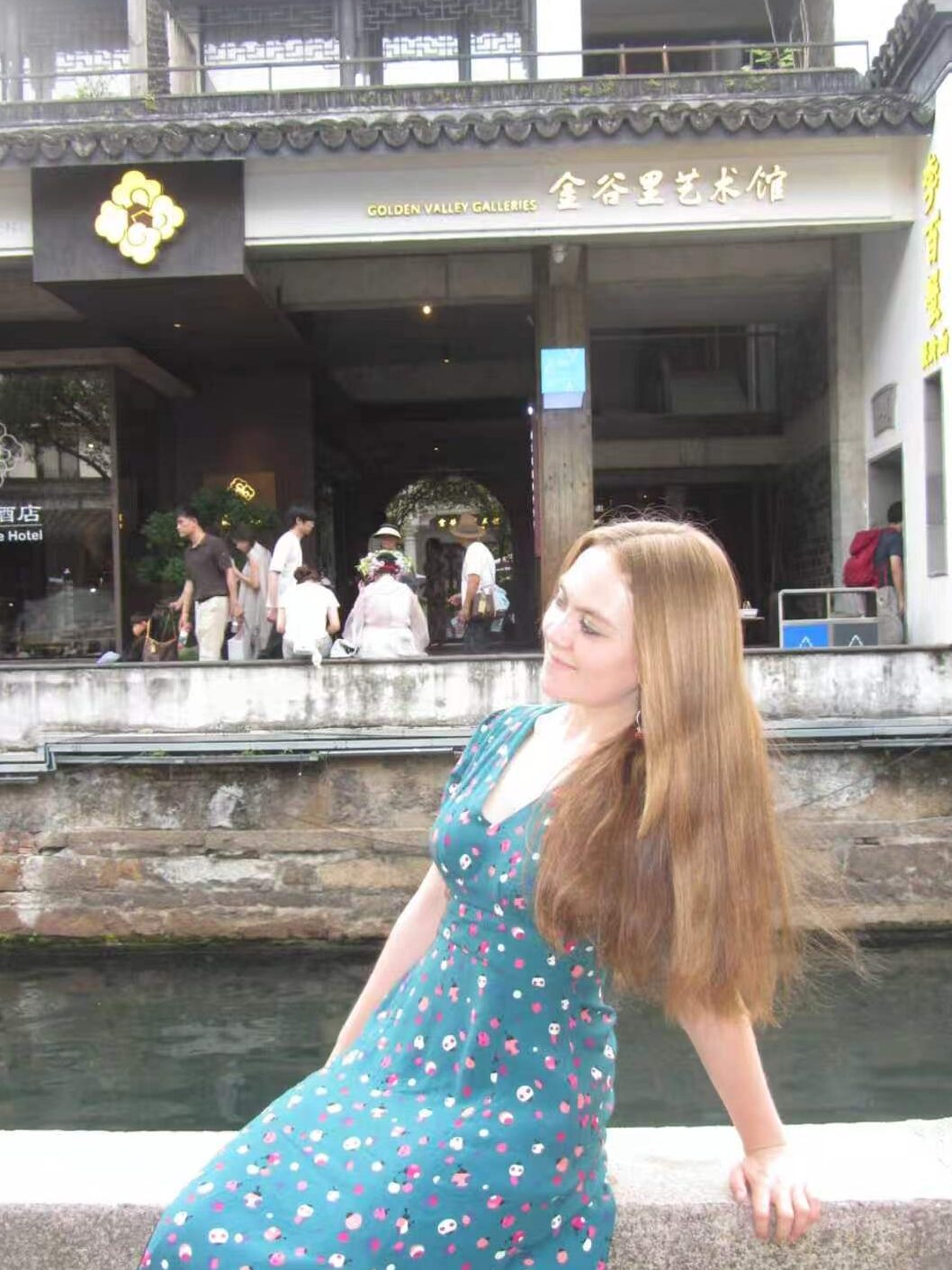
In addition to my work experience, my time in China was rich with independent explorations of Chinese history and contemporary realities. My spare time was devoted to visiting as many museums as possible, immortalizing cultural keys in notebooks and photographs. Each museum made a deep impression on me. I was particularly moved at the Shanghai Jewish Refugees Museum to witness an interaction between an Israeli family who had come to find documents related to their ancestor, who had come to Shanghai to flee the Holocaust, and the Chinese museum curator, who walked them through the history of Shanghai’s Jewish community. The China Art Museum revealed to me how China seeks to combine a reverence for its cultural heritage with an emphasis on innovation and progress. I was surprised to find an exhibit about a 20th-century Italian artist, Giorgio Morandi, in the Museum of Art Pudong. I understood that Morandi’s attempt to integrate the greatness of past Italian masters into the creation of a new modern conception of art resonated with the Zeitgeist in China. One of the most revealing museums was the Shanghai Urban Planning Museum: coupled with the World Expo Museum, these two museums created a narrative of Shanghai as the successor to the European industrial capitals of the 19th century and made me appreciate the symbolic dimension of Shanghai’s architecture and identity. My favorite museum was the Securities Museum, whose content I was able to appreciate as a result of saving it for last, visiting the exhibition after two months of engagement with China’s financial system. I had a chance to experience Soviet and Russian culture respectively on my visit to the Shanghai Exhibition Center, built in 1955 as the Sino-Soviet Friendship Building, as well as in an exhibit on Fyodor Dostoyevsky in the Museum of China Press and Publication, which featured objects brought from two museums in Russia. As a student of Russian history and culture, it was exciting to engage with Russia in closer proximity than is possible in most Western contexts. The above are just a few of the many museums I had the opportunity to explore during my stay, and each revealed a new perspective on contemporary Chinese society and its relation to the rest of the world.
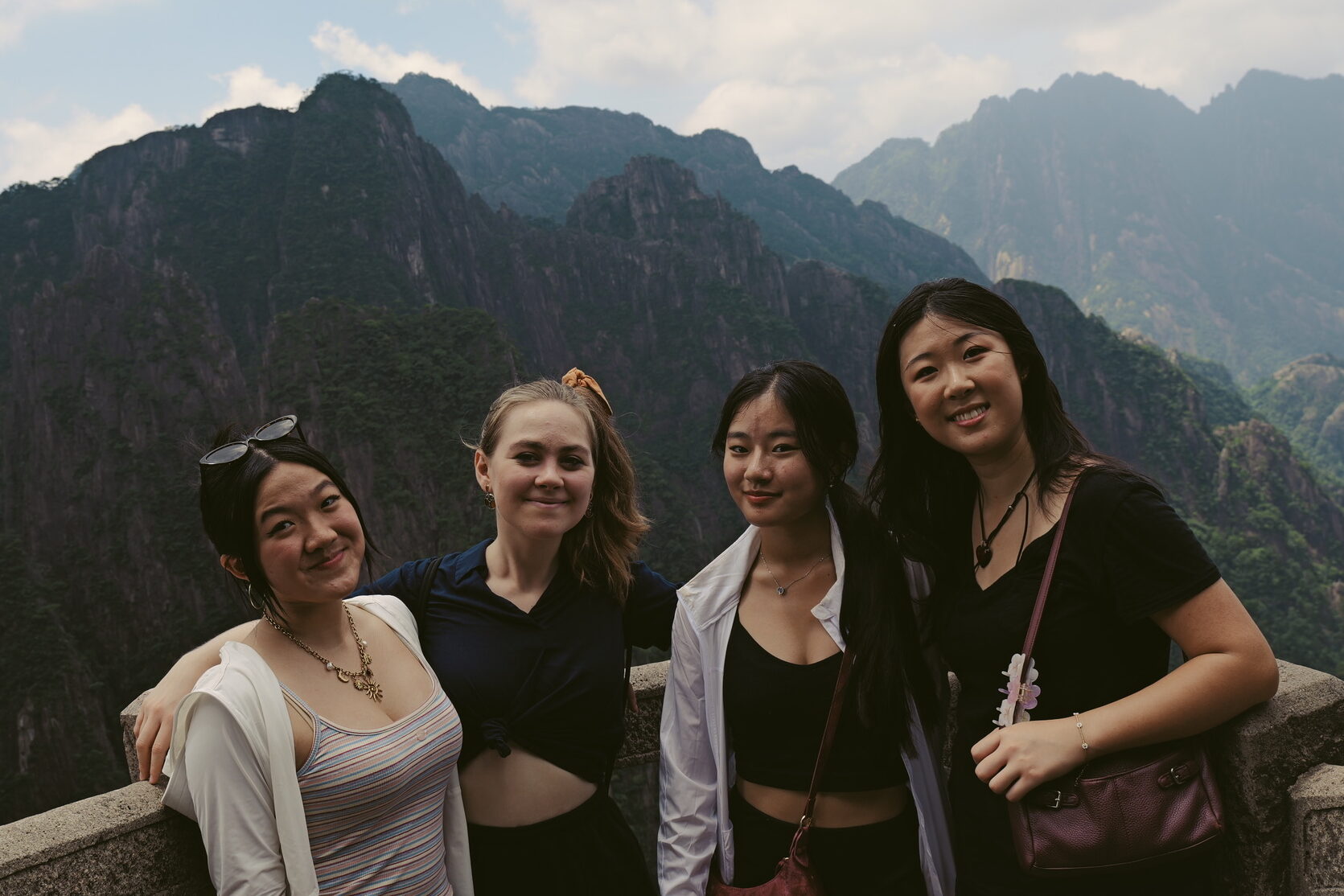
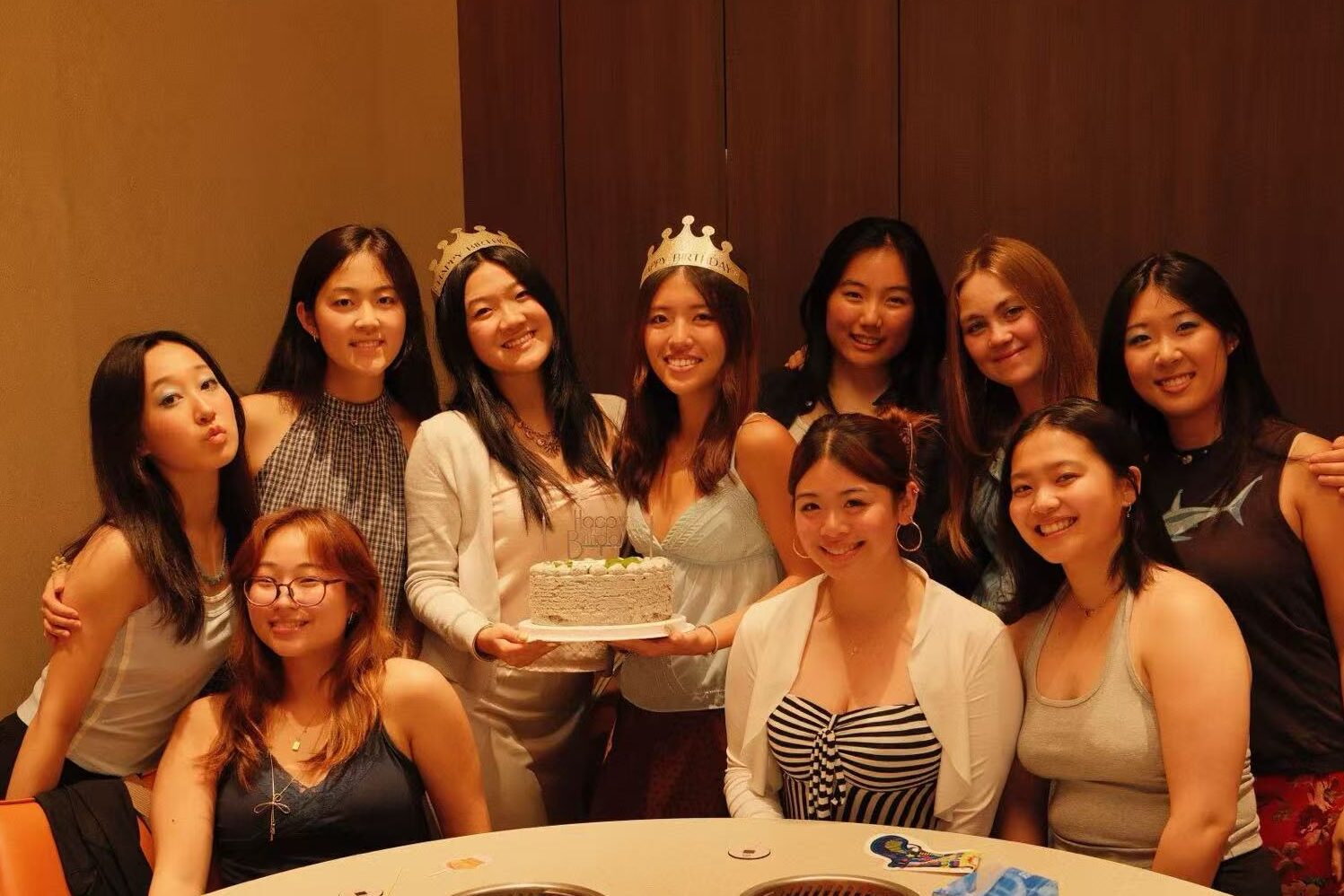
Connecting with other interns in the HCSIP program was a key part of my experience in China, and one which I had not anticipated. KTV nights were a staple of our time together; one participant and I bonded over our shared love of opera, which we sang as a break from the pop music that otherwise permeated our karaoke sessions. One of my friends kindly included me in several outings with her family friends based in Shanghai. Through my engagement with my friends, I learned a lot not only about Chinese culture but about Chinese-American culture as well. On various weekends, my friends and I ventured beyond Shanghai to Suzhou, Hangzhou, Nanjing, Huangshan, and Hongcun. Our excursion to Nanjing was interrupted by the arrival of Typhoon Bavi, which prompted us to return home for fear of missing work on Monday, but not before we had done a guided tour of the Nanjing Massacre Memorial, during which I got into a fascinating conversation about Chinese perceptions of the Holocaust with our local guide. On our last weekend in Shanghai, a small group of friends and I spent nine hours hiking the spectacular Huangshan mountain. We slept over in a quaint B&B tucked away in greenery, waking up to steaming bowls of fresh wontons prepared by our generous hosts both days.
I also undertook some exploration on my own beyond the safe confines of museums and structured narratives. One such exploration consisted of spending Shabbat at the local Jewish Center. I was touched by the warmth of the Rebbetzin, Chana Chein, who introduced me enthusiastically to the community and the Chabad center’s history, even giving me a tour of the premises and the mikvah when I returned a few weeks later. The center’s attendees consisted of Jews from all over the world with a variety of religious and political beliefs: they were united in the desire to experience community together in a distant land. I enjoyed speaking German with a Swiss entrepreneur and French to the Rabbi, and discussing history with a cohort composed of an American college student from the Midwest, a liberal Tel-Avivi on his post-army trip, a religious Jew from the UK, and the Rebbetzin herself.
I was struck by the optimism that permeates Chinese society. Public discourse is pervaded by fundamental excitement about the future and fundamental pride in being in a country that has set a constructive example of economic development for the rest of the world. I am very grateful for the funding which allowed me to have this transformative experience, and for the trust of all those who invested in my learning throughout my internship and study of Chinese culture and language more broadly. It was an honor to learn in and from such a remarkable place. I returned to Harvard with renewed fervor for my study of Chinese and a strengthened commitment to fostering relations between Europe, the US, and China.
To learn more about the Harvard China Fund Internship program, click here.