Program Dates: Monday, June 22–Friday, July 17, 2026
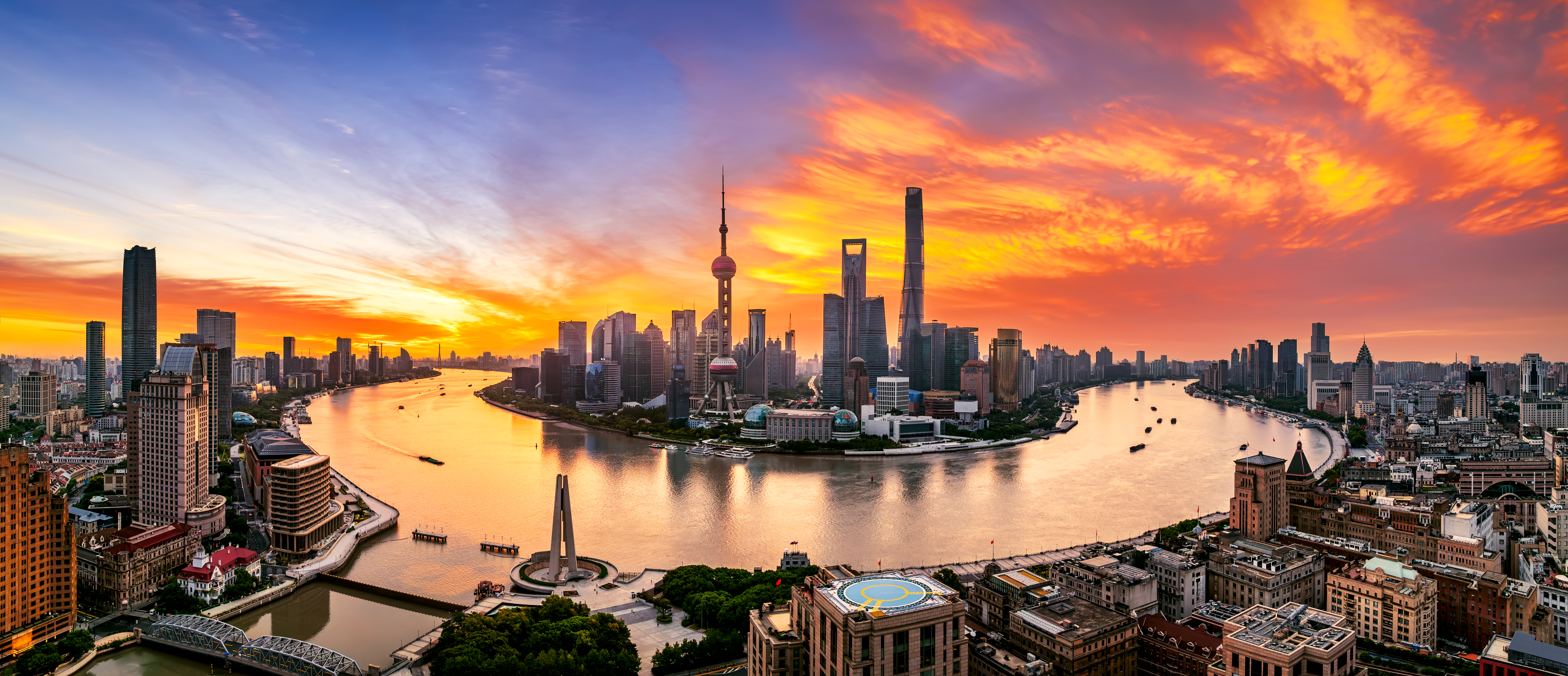
Locations: Shanghai, China (Fudan University)
Apply on CARAT by 9am ET on Friday, April 3, 2026!
Overview
Are you ready to tackle some of the world’s most pressing environmental health challenges while working alongside top scientists in a cross-cultural setting? The 2026 Harvard China Fund–Fudan University Summer Research Assistantship Program is your chance! You will engage in cutting-edge research, gain hands-on experience, and immerse yourself in the academic and cultural richness of China.
This program is facilitated and funded by the Harvard China Fund and led by Professor Peng Gao at the Harvard T.H. Chan School of Public Health. Professor Gao’s research focuses on how environmental exposures impact health, with a particular emphasis on respiratory and neurodegenerative diseases.
During this summer Research Assistantship program, participants will complete a full-time research assistantship hosted by the Department of Environmental Science and Engineering, Fudan University (Shanghai, China). You will be matched to one faculty-led project and work closely with the host research team and peer students.
This program is highly selective, admitting only 3 students, ensuring personalized mentorship and the opportunity to make a real impact. Beyond the lab, you’ll experience the energy of Shanghai’s academic community, explore China’s rich cultural heritage, and participate in an immersive international research experience.
Program Details
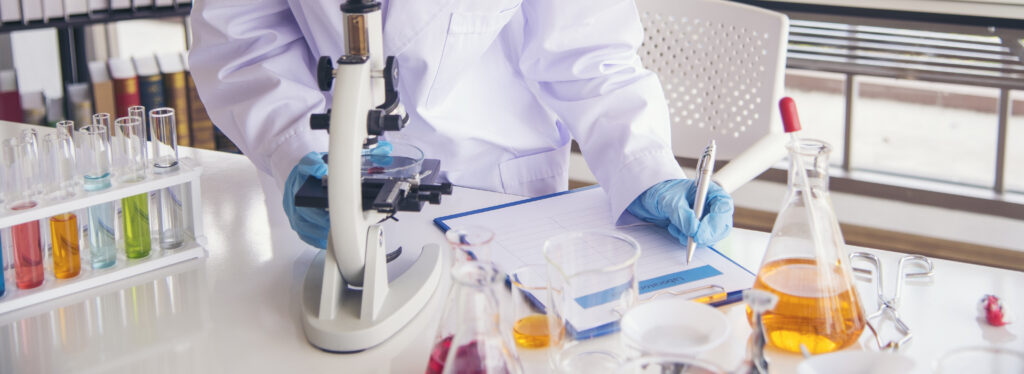
Monday, June 22–Friday, July 17, 2026: Full-time research assistantship at the Department of Environmental Science and Engineering, Fudan University in Shanghai. Participants will work closely with faculty and research teams on selected projects.
Research Topics
Project 1: Human Exposome Characterization and Toxicity Prediction of Environmental Contaminants Using High-Resolution Mass Spectrometry
- Host Faculty: Dr. Mingliang Fang, Professor
- Focus: This project aims to comprehensively characterize the human exposome by employing high-resolution mass spectrometry to measure environmental chemical exposures in biological samples. These exposure profiles will be statistically linked to health outcomes to identify key risk factors, while computational models will be developed to predict the toxicity of detected and emerging contaminants. The expected outcomes include a robust pipeline for exposure assessment, the identification of priority chemicals for biomonitoring, and a scientific foundation for evidence-based regulatory control strategies.
Project 2: Decoding the pulmonary lipid spatial metabolism mechanism driven by synergistic high-temperature and ozone exposure using multimodal technologies
- Host Faculty: Dr. Jianmin Chen, Professor
- Focus: This project aims to investigate the synergistic health effects of combined high temperature, humidity, and ozone exposure on cardiovascular-vulnerable populations under extreme climate conditions. Using a high-precision temperature-humidity-ozone exposure system together with visual transformer-based pathological quantification, deep lipidomics, and spatial metabolomics in ApoE⁻/⁻ mice, it aims to elucidate the key pathogenic mechanisms driving systemic inflammation and lung injury. The study is expected to reveal characteristic lipid reprogramming and spatial metabolic disorders under compound stress, providing a scientific basis for risk warning and targeted intervention in susceptible populations.
Project 3: Mechanisms of multiphase oxidation of human skin lipids and secondary pollutant formation under complex indoor oxidative environments
- Host Faculty: Dr. Xinke Wang, Associate Professor
- Focus: Humans have been recognized not only as passive recipients of indoor pollutants but also as important sources of emissions and active reaction interfaces. This project aims to investigate the multiphase transformation of human skin lipids and the formation of secondary pollutants under complex indoor oxidative conditions involving ozone, •OH, NOx, and blue light radiation. By integrating laboratory simulation, real-environment exposure, and authentic skin lipid analysis, it aims to clarify key reaction pathways, governing factors, and the potential implications for indoor air quality and human health.
Project 4: Mechanisms of Biological Particle Enrichment in Sea Spray Aerosols
- Host Faculty: Dr. Xiaofei Wang, Associate Professor
- Focus: This project aims to determine how biological particles in seawater (e.g., microbes, organic aggregates, and biogenic debris) are selectively transferred and enriched into sea spray aerosols during bubble bursting and wave breaking. We will combine controlled sea spray simulation experiments with particle characterization and size-resolved aerosol measurements to quantify enrichment factors and identify the key physical and chemical controls (such as particle size, surface activity, and seawater composition). The expected outcomes are a mechanistic understanding of biological particle enrichment in sea spray aerosols, parameterizations for predicting their transfer, and improved inputs for marine aerosol and air–sea exchange models.
The assistantship work in these projects is designed to provide students with hands-on research experience, exposure to advanced methodologies, and the opportunity to contribute to impactful environmental health solutions.
Program Benefits
Financial Support
Participation will be fully funded, covering essential expenses such as international/domestic airfare, accommodation in university housing (or equivalent), meals, and local transportation. Additionally, participants will receive a stipend to compensate for full-time research work.
Hands-On Research
Work on advanced projects addressing critical environmental science, engineering, and environmental health questions.
Professional Growth
Gain skills in cutting-edge techniques and strengthen your ability to collaborate, analyze data, and communicate research findings.
Networking
Build connections with peers and faculty members at Fudan University and expand your international research network.
Cultural Immersion
Explore Shanghai and the surrounding regions through guided tours and cultural experiences.
Exclusive Opportunity
Join a small cohort for personalized mentorship and an immersive international experience that blends hands-on research with cultural exploration.
Eligibility
This program is assigned to the Summer Funding Office’s Round C. According to the new funding timeline, students who have accepted offers in Round A and B will be automatically excluded.
The program is open to returning Harvard College undergraduates who:
- Are in good academic standing.
- Have a strong interest in environmental health, sustainability, environmental science/engineering, or related disciplines.
- Preferably have prior coursework or experience in biology, chemistry, public health, data science, engineering, or environmental science.
- Chinese proficiency is not required; participants will be supported by one or more English-speaking language partners throughout the program.
Application Materials
To apply for the 2026 Harvard China Fund–Fudan University Summer Research Assistantship Program, submit your application through CARAT by 9am ET on Friday, April 3, 2026.
Your application package must include:
- Statement of Interest (500–750 words): Describe your academic background, research interests, and goals for the program.
- Resume or CV: Highlight relevant experience and skills.
- Unofficial Transcript: A record of your academic performance.
Selection Process
- Applications will be reviewed by the program team, including Professor Gao and the Harvard China Fund team.
- Selected candidates may be invited for a brief Zoom interview.
- Offers will be issued in late April 2026.
- The visa application process will be managed by the Harvard China Fund.
Testimonials
This year’s program similarly emphasizes hands-on research, close faculty mentorship, international collaboration, and cultural immersion, now hosted at Fudan University in Shanghai.
“My summer in China deepened both my scientific curiosity and my sense of global connection. I had the chance to contribute to environmental health research, learn directly from mentors, and build friendships that extended far beyond the lab. It was a rare opportunity to combine rigorous research with genuine cultural exchange.” Based on Mirika Jambudi’s reflection about research training, scientific collaboration, and friendships formed through the program in 2025.
“Through the program, I gained far more than research experience. I was welcomed into a lab community, learned new scientific techniques hands-on, and grew more confident working across languages and cultures. What began as a summer assistantship became an unforgettable experience of mentorship, discovery, and personal growth.” Based on Jacob Friedman’s reflection about hands-on lab training, close mentoring, and meaningful cultural immersion in 2025.